
The Green Dot Isn’t Productivity: The Hidden Risk of an ‘Always-On’ Hybrid Workplace
Hybrid work has changed where we work. But it has also quietly changed how many of us demonstrate that we are actually working.
In the traditional office, visibility was relatively straightforward. People could see you at your desk, in meetings, speaking with colleagues or moving through the workplace. In a hybrid environment, that visibility has increasingly moved online.
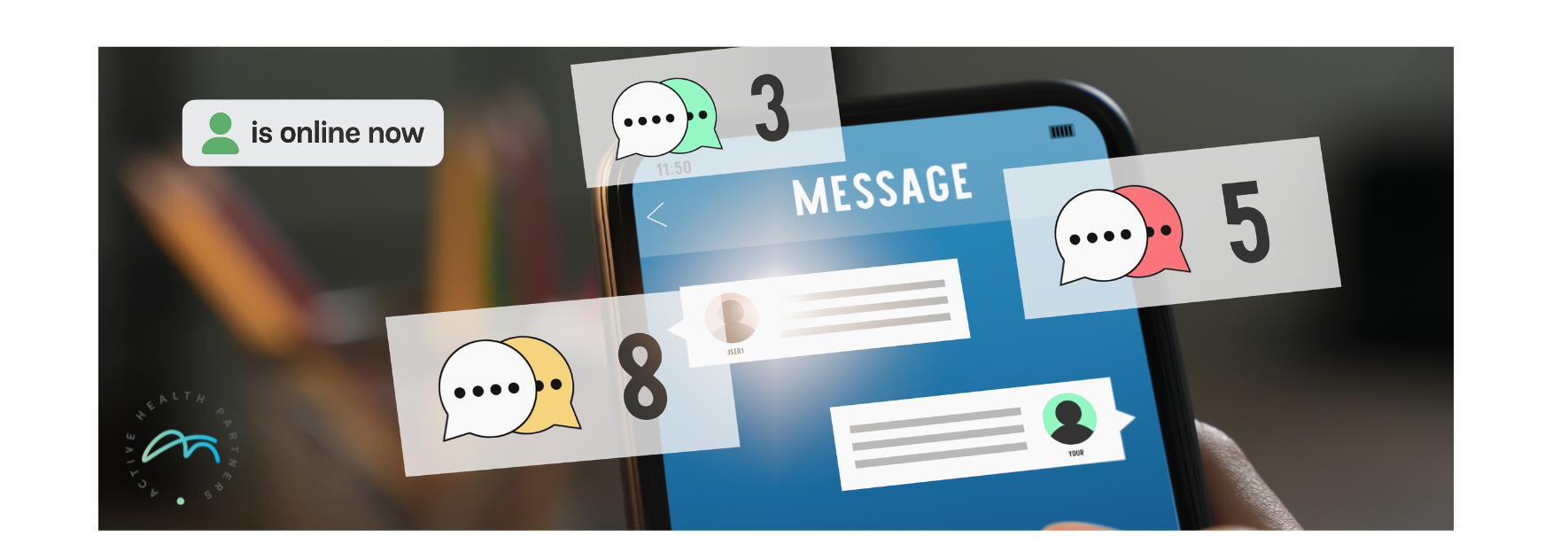
It now shows up through the green Teams or Slack status, the immediate email response, the quick reply to a message, the willingness to jump into another meeting and the subtle pressure to make sure other people can see that you are available.
There is now a term often used for this behaviour: digital presenteeism.
Recent Australian research reported by HRD Australia found that 75% of more than 1,000 office workers surveyed felt pressure to respond quickly to work messages in order to appear productive.
For employers, that should raise an important question:
Have we replaced physical presenteeism with digital presenteeism?
Being constantly visible is not necessarily the same as being productive. When the expectation of constant availability becomes embedded in the way work is designed, it can become more than a productivity issue. It can also become a health, safety and wellbeing issue.
The office has changed, but some management habits haven't.
One of the challenges of hybrid work is that managers have fewer traditional visual cues. They may not see someone arrive at 8.30 am, sit down at their desk or leave at the end of the day. They cannot glance across the office and see whether someone is working on a report, speaking with a client, taking a short break or preparing for a meeting.
That lack of visibility can create uncertainty. When managers cannot physically see people working, there can be a temptation to substitute digital activity for physical presence.
How quickly did they respond? Was their status green? Were they available for the meeting? Did they answer the email? Were they online when someone needed them?
The problem is that these are not always good measures of meaningful performance.
Someone can respond to every Teams message within 30 seconds and still achieve very little deep or valuable work. Another employee might turn off notifications for 90 minutes, complete a complex task and produce an excellent result.
Which employee was more productive?
The answer seems obvious, yet many hybrid workplaces still unintentionally reward the first behaviour. Without meaning to, organisations can create cultures where responsiveness is mistaken for reliability, online presence is mistaken for contribution and availability is mistaken for performance.

The problem with being constantly available
Every notification carries a small cost.
A Teams message appears, an email arrives, someone sends a “quick question”, or another meeting invitation pops up. The employee shifts their attention, responds, and then tries to return to whatever they were doing.
Individually, these interruptions can seem minor. Across an entire working day, however, they can create a very fragmented and inefficient way of working. The employee may be busy all day, but not necessarily effective.
There is also a physical dimension to this. An employee who feels they must always be available may be less inclined to leave their workstation. They may eat lunch at their desk, postpone a walk, avoid taking movement breaks or remain logged on later because their colleagues are still online.
Over time, the boundary between being at home and being at work can become increasingly blurred.
That matters because Australian health and safety guidance already recognises some of these issues. Safe Work Australia identifies sedentary work, fatigue associated with long hours or being “always on”, poor support, job demands and other psychosocial hazards among the risks employers may need to consider when employees work from home.
Productivity and availability are not the same thing
This distinction is particularly important as organisations continue to debate office attendance.
One of the common arguments in favour of greater office attendance is that people are more connected and productive when they are physically together. In some cases, that may absolutely be true. Some work benefits from in-person collaboration, mentoring, problem-solving and team connection.
But it should not simply be assumed that office attendance automatically creates better work.
A recently published study involving 7,704 employees compared remote, hybrid and onsite workers. Remote employees reported the highest average wellbeing, followed by hybrid workers and then onsite employees. The study also found no statistically significant evidence that remote workers were less connected or experienced higher turnover.
That does not prove remote work is always better. What it does suggest is that work location alone is a poor measure of whether work is functioning well.
The same applies to online visibility.
Instead of asking whether someone is at their desk, physically or virtually, employers may be better served asking more useful questions.
Are expectations clear? Is the work getting done? Is the quality good? Can employees concentrate when they need to? Are people collaborating effectively? Do employees have appropriate support? Are workloads sustainable? Are problems being identified early?
Those questions tell us far more about the health of a hybrid workplace than the colour of someone’s status indicator.
Digital presenteeism can become a psychosocial issue
This is where the conversation becomes particularly relevant from a workplace health and safety perspective.
Psychosocial hazards are not limited to bullying, harassment or serious workplace conflict. They can also arise from how work itself is designed, managed and supported.
Safe Work Australia identifies hazards including high job demands, low job control, poor support and low role clarity. It also emphasises that psychosocial hazards can interact and combine, increasing the overall risk of harm.
Consider an employee with a high workload, frequent online meetings, an expectation of rapid responses, limited control over when they can focus, poor boundaries around working hours and a manager who equates online visibility with commitment.
None of those issues necessarily looks dramatic in isolation. Together, however, they can create an unhealthy system of work.
That is why organisations need to look beyond individual wellbeing initiatives. A meditation app may be useful. A lunchtime yoga session may be useful. A wellbeing webinar may be useful. But none of them fixes a work design that requires employees to be permanently interruptible.
Sometimes the most effective wellbeing intervention is simply designing work better.
Hybrid work needs periods of genuine focus
One practical step employers can take is to deliberately protect focused work.
Not every message needs an immediate response. Not every discussion requires a meeting. Not every employee needs to be contactable every minute of the working day.
Teams can reduce unnecessary pressure by creating simple and clear communication norms. For example, an urgent issue may require a phone call. An important but non-urgent issue may be appropriate for a message. Something requiring thought, context or a written record may be better suited to email or a shared project system.
This might sound simple, but clarity around communication can remove a surprising amount of uncertainty.
Managers can also give employees explicit permission to turn notifications off during periods of concentrated work. That permission matters because culture is shaped by behaviour, not only policy. If the organisation says, “We trust you to manage your work,” but employees believe a grey status indicator will be interpreted as disengagement, the unwritten rule will usually win.
Good hybrid work requires both flexibility and structure. People need autonomy, but they also need clarity about when they are expected to be available, how quickly they should respond and when it is acceptable to focus without interruption.
Do not forget the physical consequences
There is another part of digital presenteeism that receives less attention: movement.
One of the simplest things we encourage people to do during computer-based work is to regularly change position. Stand up, walk, stretch, get some water, look away from the screen and use opportunities to move throughout the day.
But an employee who feels they must constantly demonstrate availability may become reluctant to leave the screen. They may stay seated for longer, take fewer breaks and spend more time in static postures.
Over time, prolonged sedentary work combined with a poorly configured workstation can contribute to discomfort and musculoskeletal problems.
This is why ergonomics should not be treated simply as buying someone a better chair. A good workstation matters, but so do the behaviours surrounding it.
An employee might have a suitable chair, external screen and separate keyboard, yet still experience discomfort if they remain in one position for too long, work through breaks, take back-to-back online meetings and feel unable to step away from the desk.
In other words, the workstation setup and the work culture need to support each other.

Five things employers can do now
The good news is that reducing digital presenteeism does not require another 40-page policy. It does, however, require practical conversations and some clear expectations.
1. Define what good performance actually looks like
Where possible, performance should be measured by quality, outcomes, deadlines, collaboration and contribution rather than hours of visible activity.
This helps shift the focus away from “Who looks busy?” towards “What work is actually being achieved?”
2. Establish communication expectations
Employees should understand which channels are used for different types of communication, what genuinely requires an immediate response and what can wait.
Without this clarity, many people default to treating everything as urgent, which can increase stress, interruptions and unnecessary reactivity.
3. Protect focused work
Organisations should encourage periods where notifications can be switched off and meetings are avoided.
For some teams, this may involve agreed focus blocks. For others, it may simply mean managers modelling the behaviour themselves and making it clear that deep work is valued, not seen as disappearing.
4. Make movement normal
Managers can play an important role by normalising movement and breaks. Taking a short walk, standing up between meetings or being unavailable for ten minutes should not be interpreted as disengagement.
If employees feel they have permission to move, they are more likely to build healthier habits into their working day.
5. Ask employees what is actually happening
This is perhaps the most important step.
You cannot manage a risk you cannot see. Employers need a reasonable way to understand what is happening for people working across different locations.
That includes asking about workload, interruptions, working hours, support, workstation issues and the practical realities of working from home or across a hybrid week.
Consultation is also an important part of the WHS risk-management process. Employees working from home may be the only people who know what their working environment is really like, which makes their input essential.
Find out more here
Hybrid work requires visibility, just not the green-dot kind
Employers do need visibility in a hybrid workplace. The important point is that the visibility should relate to the things that genuinely affect health, safety, wellbeing and performance.
The question is not whether someone’s Teams status is green.
The better questions are:
Have employees been trained to work safely from home? Are home workstations reasonably set up? Are physical or psychosocial risks being identified? Can employees report concerns easily? Does someone follow up when an issue is identified? Do managers understand how to support people working across different locations? Does the organisation have reasonable records showing what has been done?
That is the kind of visibility worth building.
The next phase of hybrid work should be about better work
I do not think employers need to choose between flexibility and performance. Nor should the choice be between employee wellbeing and accountability.
Well-designed hybrid work should support all of them.
To do that, organisations need to move beyond some of the habits inherited from traditional office work. Seeing someone at their desk was never a particularly sophisticated measure of productivity. Seeing a green dot beside their name is not much better.
The organisations that get hybrid work right will increasingly focus on outcomes, communication, good work design, appropriate boundaries, physical health, psychosocial safety and early identification of problems.
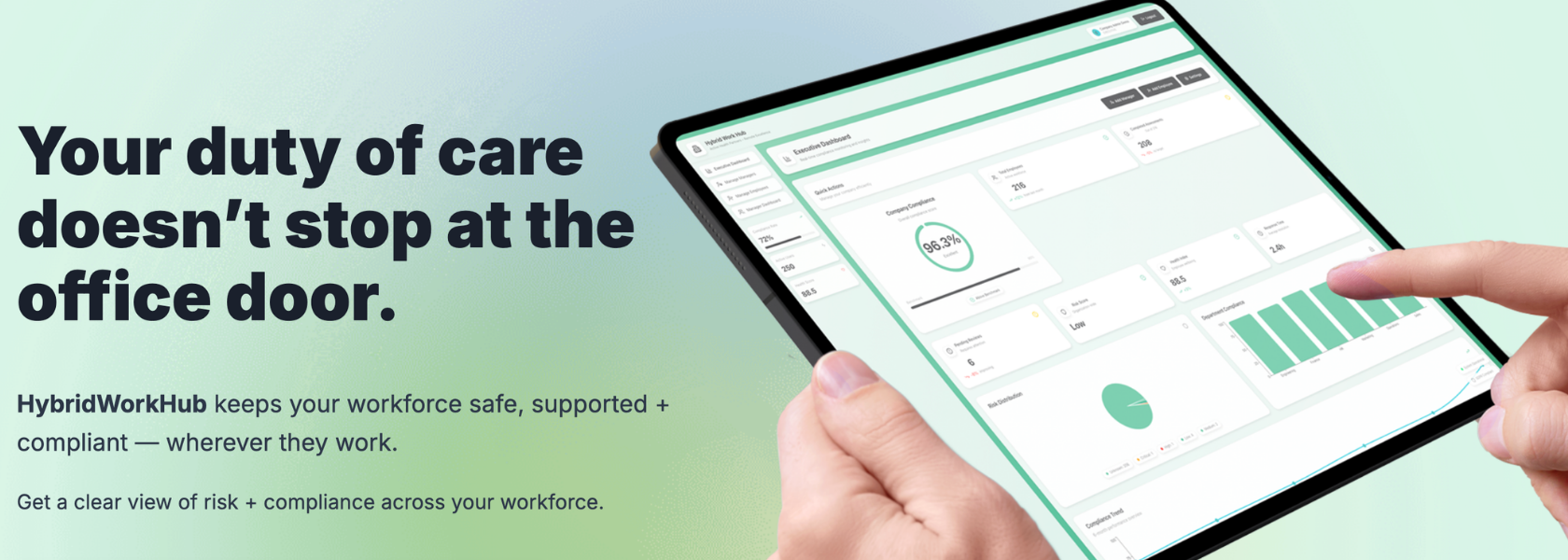
At Active Health Partners, our work with organisations is increasingly about bringing these pieces together — from practical hybrid-work training and ergonomic assessments to systems that help employers identify and manage risks across a distributed workforce.
The aim is not to add more administration to hybrid work. It is to help organisations create environments where people can work safely, sustainably and perform at their best, wherever that work happens.

Daniel Grynberg is Director of Active Health Partners and works with Australian organisations to improve hybrid workplace health, safety, ergonomics and employee wellbeing. Active Health Partners provides workplace training, ergonomic assessments and hybrid workplace health and safety solutions for organisations across Australia.
